What Your Lens Selection Confesses Before You Say a Word

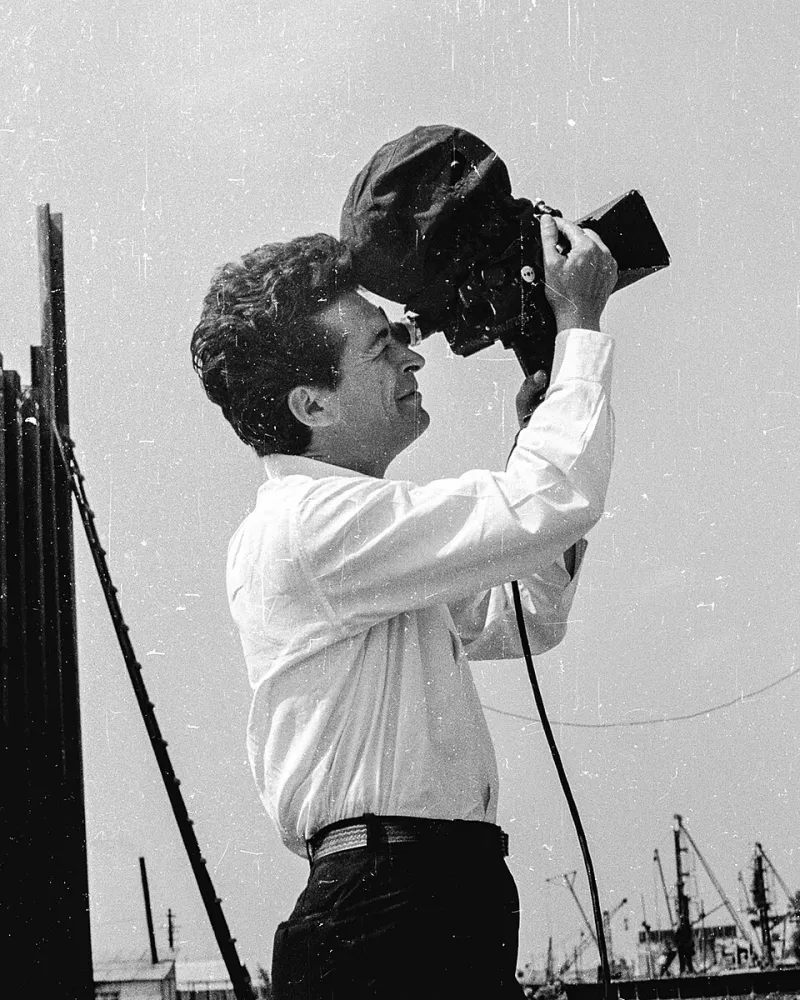
Photo: Conrad Poirier, Public domain, via Wikimedia Commons
Before a single line of dialogue lands, before a protagonist steps into frame, before a story has declared its intentions, an audience is already reading you. They are reading the focal length you chose. They are reading the slight warmth you pushed into shadows during the grade. They are reading whether your camera drifts with a character or holds still against them. These are not neutral decisions. They are, in the most precise sense of the word, confessions.
The question worth sitting with is whether you know what you are confessing.
The Unconscious Vocabulary
Every filmmaker develops a technical vocabulary long before they develop the critical distance to examine it. You reach for a 35mm lens on an intimate scene not because you reasoned through the alternatives but because something in your instinct said this. You let a handheld shot breathe with a little more drift than the script perhaps demanded because stillness felt dishonest to you in that moment. These choices accumulate. Over multiple projects, they form a pattern—and that pattern, whether you authored it consciously or not, becomes the primary language through which audiences experience your sensibility.
The danger is not in having instincts. Instincts are among the most valuable tools a filmmaker possesses. The danger is in mistaking habit for instinct, and repetition for voice.
Consider frame rate. Many filmmakers gravitate toward a specific frame rate aesthetic—the slight dream-weight of 24 frames per second, or the hyper-present clarity of higher rates—without fully interrogating why. The choice carries meaning. It communicates the film's relationship to memory, to immediacy, to the distance between the viewer and the event on screen. When that choice is made consciously, it deepens the work. When it is made by default, it reveals only that the filmmaker has not yet asked the question.
Color as Character
Of all the technical confessions a filmmaker makes, color grading may be the most intimate. The palette you are drawn to—the particular desaturation of skin tones, the decision to hold warmth in midtones while cooling the shadows, the specific teal that appears in your work with suspicious frequency—these are not simply aesthetic preferences. They are emotional positions.
A filmmaker who consistently drains color from interiors is telling you something about how they experience domestic space. A filmmaker who reaches for golden, overexposed highlights in exterior scenes is communicating a particular relationship to possibility and memory. These decisions function below the threshold of conscious narrative, but they are among the most powerful communicative tools in the medium.
The productive exercise here is not to abandon your palette but to understand it. Pull up your last three completed projects and look only at stills—no sound, no motion, no story context. What do those images share? What emotional temperature do they collectively occupy? If you can name it, you can choose whether to deepen it or deliberately depart from it. If you cannot name it, you are being spoken through rather than speaking.
The Camera's Relationship to the Body
Camera movement is perhaps the most philosophically loaded technical decision in a filmmaker's toolkit, precisely because it defines the camera's relationship to human presence. Does your camera move with characters, anticipating their actions in a way that suggests intimacy or even complicity? Does it hold at a remove, observing rather than accompanying? Does it drift slightly, as though carried by something as imprecise and honest as breath?
Each of these choices encodes a philosophical stance toward the people being filmed. A filmmaker who consistently leads their subjects with camera movement is expressing a desire for control, or perhaps a deep investment in narrative certainty. A filmmaker whose camera is perpetually reactive—always catching up, always slightly behind—is communicating something about the unpredictability of human behavior and their own willingness to be surprised by it.
None of these stances is superior. All of them are revealing. The question is whether you have chosen your stance or inherited it from the films that shaped you.
Inherited Aesthetics and the Work of Separation
This is a particularly American challenge for contemporary filmmakers, given the extraordinary density of visual influence available through streaming platforms, film school curricula, and the constant circulation of reference reels across social media. It has never been easier to absorb aesthetic vocabulary from other filmmakers. It has correspondingly never been harder to distinguish between what you genuinely feel and what you have simply absorbed.
The filmmaker who came of age watching a particular cinematographer's work will carry traces of that influence in their own technical choices, often without awareness. The solution is not to reject influence—influence is the medium through which craft is transmitted across generations—but to subject your technical choices to the same scrutiny you would apply to a story choice. Ask not only what you are choosing but why, and whether the why is yours.
Making the Inventory
A practical framework for this kind of self-examination begins with inventory. Gather a representative sample of your work—finished projects, significant fragments, even the footage you shot for yourself and never showed anyone. Review it with a specific set of questions:
What focal lengths appear most frequently, and in what emotional contexts? Where does your camera move, and where does it hold? What happens to color in moments of emotional intensity—does warmth enter or leave? How do you handle transitional moments, the in-between spaces where a scene is arriving or departing?
The patterns that emerge from this review are your technical fingerprint. Some of what you find will confirm choices you made deliberately and would make again. Some of what you find will surprise you—tendencies you did not know you held, repetitions you would not have consciously endorsed.
Both categories are valuable. The deliberate patterns can be deepened and refined. The unconscious ones can be examined, and then either claimed or released.
The Distinction That Matters
There is a meaningful difference between a technical signature and a technical limitation. A signature is a recurring choice that serves the work—that, when examined, reveals a coherent artistic sensibility making consistent decisions for legible reasons. A limitation is a recurring choice that constrains the work, that forecloses possibilities the story might have needed.
The goal of this kind of self-examination is not to eliminate your signature. It is to ensure that your signature is, in fact, yours—consciously held, deliberately deployed, and flexible enough to serve the full range of stories you want to tell.
The camera, ultimately, does not lie about the person behind it. Every technical decision you make is a sentence in a confession that audiences read before they read anything else. The only question is whether you have read it yourself.