The Art Nobody Sees: Why the Most Powerful Filmmaking Decisions Are the Ones Your Audience Never Notices
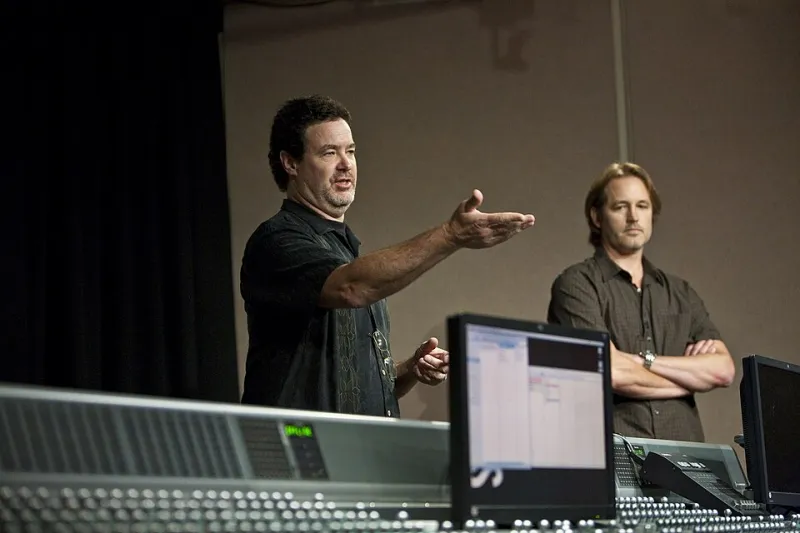
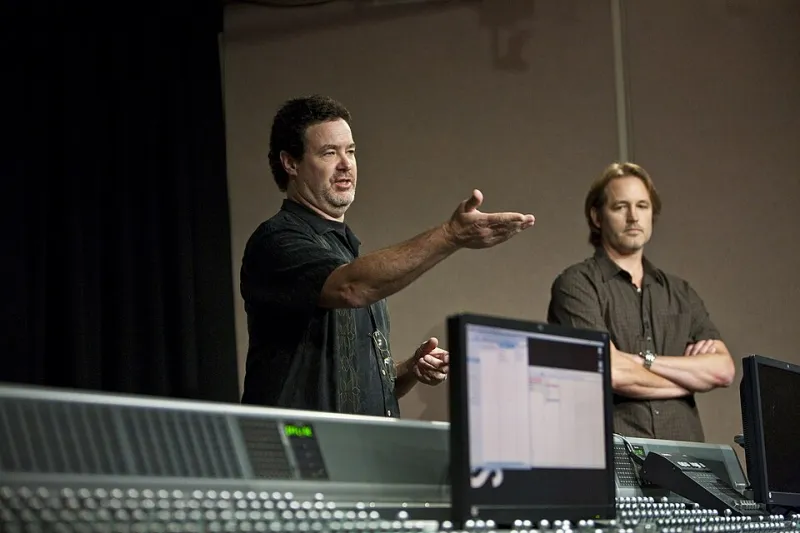
Photo: Vancouver Film School, CC BY 2.0, via Wikimedia Commons
There is a particular kind of professional frustration unique to filmmakers. You spend three days perfecting a color grade, coaxing warmth into a late-afternoon scene until the light feels genuinely lived-in rather than manufactured. You rebuild a sound design from scratch because the original mix was pulling attention toward itself rather than dissolving into the emotional current of the scene. You recut a sequence seven times, shaving frames until the rhythm breathes exactly right. Then the film screens, and not a single person in the audience mentions any of it.
They say the story moved them. They say the performances felt real. They say the film worked—without being able to explain precisely why.
For the emerging filmmaker, this silence reads as failure. For the professional, it is the closest thing to a standing ovation the craft will ever offer.
The Paradox at the Center of the Discipline
Filmmaking operates under a strange contractual arrangement with its audience. The viewer agrees, consciously or not, to surrender their critical awareness in exchange for emotional immersion. Your job is to honor that agreement at every level of production—which means that every technical and aesthetic decision you make should be working to deepen that surrender, not interrupt it.
The moment a viewer notices your color grade, you have broken the contract. The moment a sound effect calls attention to its own presence, the scene loses its grip. The moment a cut feels like a cut rather than a natural progression of thought, the audience is briefly returned to their seat in a theater rather than inhabiting the world you built.
This is the central paradox: the more sophisticated your craft becomes, the less evidence of it survives in the finished film. Mastery, in this discipline, erases itself.
What Invisible Work Actually Looks Like
Consider the mechanics of a well-designed sound mix. In a scene of genuine emotional tension, the ambient noise of a room—the hum of fluorescent lighting, the distant sound of traffic, the particular acoustic signature of a space—can be tuned to mirror the psychological state of the character. Raise the frequency slightly, narrow the dynamic range, and the room begins to feel smaller, more pressurized. The audience doesn't register this as a sound design choice. They register it as anxiety. They feel something without knowing why they feel it.
The same principle governs color. A sequence graded with subtly desaturated midtones and cooled shadows doesn't announce itself as a stylistic decision. It simply makes the world feel a little colder, a little more withdrawn. The viewer absorbs that quality emotionally without processing it intellectually.
Pacing operates identically. A scene cut with slightly longer holds than the dialogue strictly requires creates a pressure that the audience experiences as weight—the sense that something is being left unsaid, that the characters are carrying more than the words reveal. No one walks out of a film saying, the editor held on that close-up for eleven frames longer than conventional rhythm would suggest. They say the scene felt heavy. They say the performance was devastating.
Your technical choices are the architecture beneath the experience. Nobody admires the load-bearing walls.
Why Emerging Filmmakers Struggle With This
The impulse toward visible craftsmanship is understandable, particularly early in a career. When you are still building credibility—with collaborators, with financiers, with festival programmers—there is a powerful temptation to make your technical sophistication legible. To grade in a way that reads as intentional. To cut in a way that signals awareness of rhythm. To compose in a way that announces visual intelligence.
This is craftsmanship performing itself rather than serving the work. And audiences, even audiences who cannot articulate what they are sensing, feel the difference. A film that is showing you its technique is a film that has broken its contract. The viewer becomes a critic rather than a participant.
The shift away from this tendency is not a single moment of insight. It accumulates through repeated experience of watching your most deliberate choices land with zero conscious recognition—and then understanding, slowly, that this is precisely what you were aiming for.
The Liberating Consequence of Invisibility
Here is what accepting the invisibility of your best work actually makes possible: you stop designing for recognition and start designing for effect.
When you are no longer concerned with whether the audience will notice a choice, you become free to make the choice that serves the scene most precisely—even if that choice is radical, even if it is strange, even if it would read as an error to someone watching for technique rather than surrendering to experience. You can push a grade further into abstraction because you are not worried about it being perceived as a mistake. You can hold a cut longer than is comfortable because you are not worried about being accused of poor timing. You can strip a sound design down to near-silence because you are not worried about appearing to have neglected it.
The filmmaker who has made peace with invisibility is operating with a freedom that is genuinely unavailable to someone still seeking acknowledgment through their technical decisions. The work becomes bolder precisely because it has stopped trying to be seen.
A Different Measure of Success
This does not mean craft goes unrewarded. It means the reward arrives in a different form than public recognition of specific choices.
The reward is a film that holds together with an integrity the audience cannot quite locate. It is the viewer who watches a scene three times not because they are studying it but because they keep returning to how it made them feel. It is the collaborator who says, without knowing exactly why, that working on this project felt different—that the attention brought to every corner of it created a kind of gravity the final film carries.
These responses are the evidence of invisible work done well. They are not credited to your color grade or your sound design or your editorial rhythm. They accrue to the film as a whole, which is exactly where they belong.
The craft that nobody sees is the craft that everybody feels. Learning to make that distinction—and to find in it not frustration but purpose—is one of the more important passages in a filmmaker's development. The unwatched cut, the unnoticed grade, the imperceptible hold: these are not failures of communication. They are the discipline working exactly as it should.