The Work Nobody Watched: How Today's Invisible Films Become Tomorrow's Creative Foundation
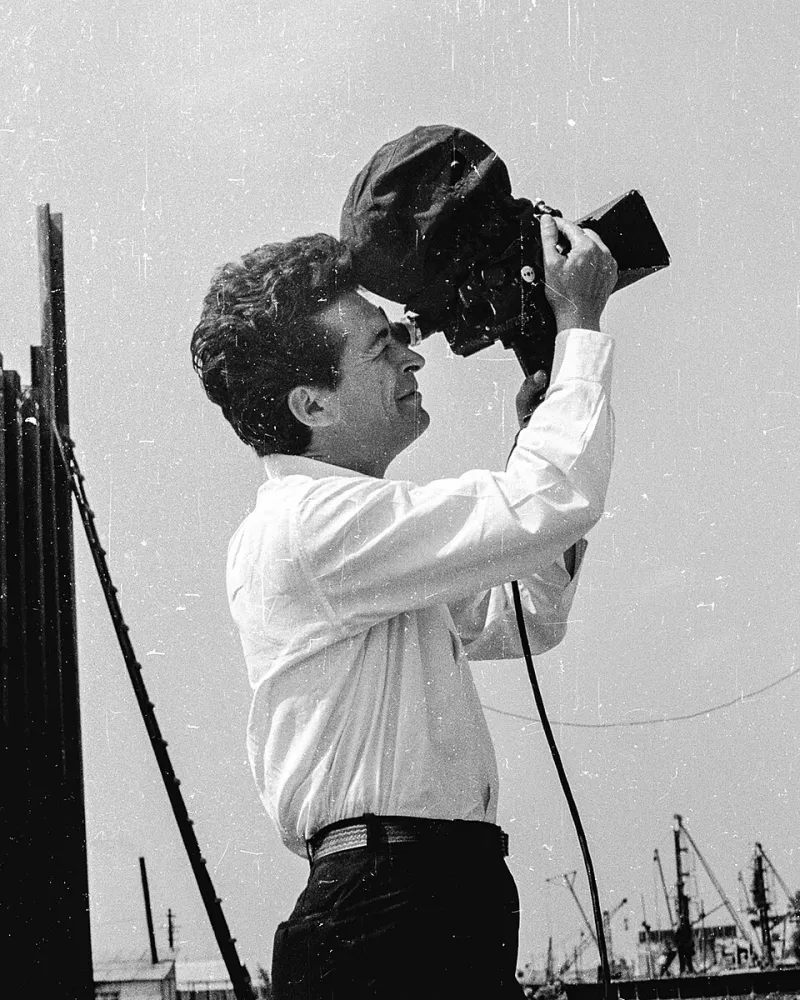
Photo: Alex Gâlmeanu, CC BY-SA 4.0, via Wikimedia Commons
The Myth of the Wasted Project
There is a particular kind of grief that belongs exclusively to filmmakers: the grief of the finished work that nobody finds. You pour months — sometimes years — into a project. You make difficult, uncompromising decisions. You resist the easier path at every junction. And then the film surfaces into the world and meets near-total silence.
The conventional response is to call this failure. To file the project away, absorb whatever lessons seem available, and move forward with a corrected approach. The logic appears sound. The market spoke. You listened.
But that logic contains a serious error in its timeline.
What a film earns in its first season of release and what it contributes to the broader culture of filmmaking are two entirely separate conversations — and conflating them is one of the more damaging habits a working filmmaker can develop.
Influence Without an Audience
Consider how many of the films now regarded as essential American cinema were, at the time of their release, commercial or critical footnotes. Blade Runner underperformed at the box office in 1982 and was largely dismissed by mainstream reviewers. The Thing, released the same summer, was called repellent and cold. Both films went on to reshape the visual grammar of entire genres, training generations of filmmakers who encountered them not in theaters but through worn VHS copies and late-night cable broadcasts.
The audience those films eventually found was not the audience they were made for. It was an audience that didn't yet exist at the time of production — one that would arrive years later, already primed by the cultural ripples the films had set in motion without anyone quite noticing.
This is not an accident of distribution. It is a structural feature of how influence actually moves through creative culture.
Training the Audience You Haven't Met Yet
Every uncompromising choice you make in a film that earns no immediate traction does something specific: it enters the conversation at a frequency most listeners aren't tuned to yet. That doesn't mean the signal isn't transmitting. It means the receivers haven't been built.
The filmmaker who refuses to soften an ambiguous ending, who insists on a visual rhythm that demands patience, who makes formal choices that feel abrasive against current conventions — that filmmaker is not making a mistake. They are, in the most literal sense, making a proposal. They are saying: this is a way of seeing that I believe has value.
That proposal doesn't expire when the opening weekend numbers come in. It persists. It circulates among the smaller audiences who do find the work. It influences the next project those viewers undertake or fund or discuss. And through that chain of small, largely invisible transmissions, the original film begins to mean something it couldn't mean alone.
You are not just making films. You are, project by project, constructing a vocabulary that other people will eventually borrow — often without knowing where they learned it.
The Long Game of Creative Specificity
This understanding should fundamentally alter how you evaluate creative decisions during production.
When you are in the edit bay debating whether to hold on a shot three seconds longer than convention suggests, you are not just making a choice about this film. You are making a choice about the kind of filmmaker you are training yourself to be, and — more importantly — about the kind of attention you are asking your eventual audience to bring.
The filmmaker who consistently capitulates to the easier choice in service of broader immediate accessibility is, over time, training an audience in passivity. They are signaling that their work will always meet the viewer exactly where the viewer already stands. That is a generous impulse, but it forecloses a particular kind of relationship — the one where the work asks something of the audience and the audience rises to meet it.
The filmmaker who holds the difficult line, even in obscurity, is doing something rarer. They are creating the conditions for a different kind of viewer — one who arrives at the work already prepared to engage with it seriously, because the work itself demanded that preparation.
When Failure Becomes Reference
There is a phrase that circulates among cinematographers and directors when they encounter a film that broke new visual ground without finding its moment: that was ahead of its time. It's usually meant as consolation. But it contains a genuine observation about how creative culture absorbs innovation.
Work that arrives before its audience has the conceptual tools to receive it doesn't vanish. It waits. It becomes a reference point — first for the small community that found it early, then gradually for the wider culture those early viewers shape.
The director who made that film did not fail. They made a deposit into an account whose returns are deferred. The interest, when it finally compounds, often exceeds anything the original release could have generated.
This is not an argument for deliberate obscurantism or for treating inaccessibility as a virtue. Difficulty for its own sake is still a dead end. The distinction lies in why the work is uncompromising. If the choices are driven by a genuine vision — by a specific way of seeing that the filmmaker believes is true — then the apparent absence of an audience is a timing problem, not a verdict.
What This Demands of You Now
Practically speaking, this framework changes the question you bring to each project.
Instead of asking who is watching this right now, the more generative question becomes what is this work teaching the person who finds it in five years? What habits of attention is it building? What visual or emotional vocabulary is it introducing? What does it propose about the relationship between a film and its viewer?
Those questions don't make the work easier to complete or easier to release. They don't guarantee an audience, deferred or otherwise. But they do give the work a different kind of weight — one that isn't dependent on the immediate response it receives.
The most durable creative legacies in American cinema were rarely built through a single celebrated work. They were built through a sustained body of choices, many of them made in projects that earned little attention at the time, all of them accumulating into something that subsequent generations recognized as a coherent and irreplaceable point of view.
The Invisible Architecture of Influence
You are, right now, building something whose full shape you cannot see. Every project you complete — including the ones that surface and sink without ceremony — becomes part of the architecture that your future audience will eventually inhabit.
The film nobody watches today is not a failure waiting to be redeemed. It is a foundation being laid.
The question worth sitting with is not whether anyone is watching. It is whether what you are making is worth finding.