The Voice That Wasn't in the Script: How an Unexpected Collaborator Rewrites What You Thought You Were Making
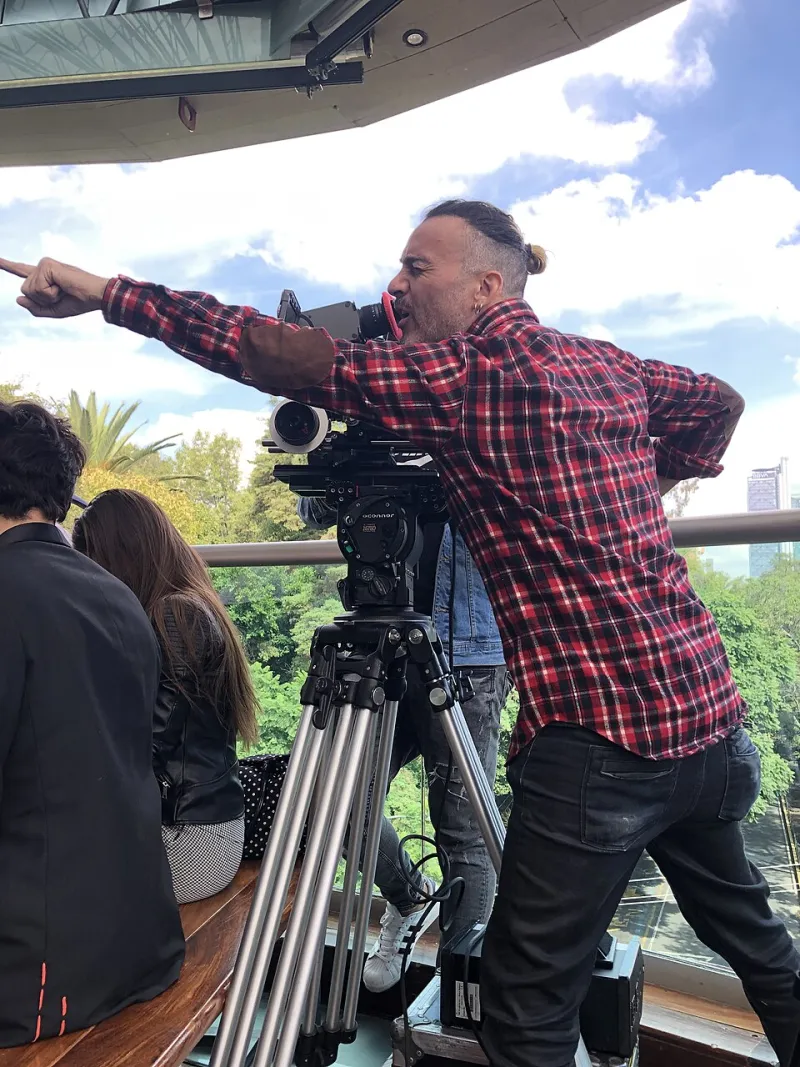
Photo: Arthur Gilber, CC BY-SA 4.0, via Wikimedia Commons
Every filmmaker enters a project carrying a version of the film that exists only in their own mind. It is, in that private form, complete — fully realized in imagination if not yet in execution. The process of making the film is, in part, the process of translating that internal version into something that can exist in the world. What no filmmaker fully anticipates is how profoundly that translation can be altered by the people who help carry it out.
Sometimes a collaborator arrives and the film you thought you were making quietly becomes something else. Not something lesser. Often something more. But something genuinely different — something that could not have existed without the friction, the perspective, and the particular creative intelligence that another person brought to the table.
The Collaborator You Didn't Audition
The most significant creative partnerships are not always the ones you planned for. A director of photography hired for their technical reliability turns out to possess a visual instinct that reframes your entire approach to the film's geography. A composer brought on late in post-production delivers a score that reveals an emotional undercurrent in the material that you had not consciously recognized as being there. A producer whose primary role was logistical asks a single story question during a location scout that restructures the third act.
These moments are not accidents, exactly. They are the natural consequence of bringing genuinely talented people into proximity with your material. Talent does not stay in its lane. It sees things. It responds. It contributes in ways that exceed the job description.
The question is what you do when that happens.
The Instinct to Protect the Original Vision
For many filmmakers — particularly those earlier in their careers, when the sense of creative ownership is most fiercely guarded — the instinct is to manage these contributions carefully. To take what is useful and redirect what feels threatening. To keep the original vision intact against the pressure of other perspectives.
This instinct is not without merit. A filmmaker who surrenders to every strong voice in the room will make a film that belongs to no one. The coherence of a vision matters. The ability to hold a through-line across hundreds of decisions made by dozens of people is precisely what directing requires.
But there is a version of that protective instinct that is less about coherence and more about fear — the fear that if the film changes, it will no longer be yours. And that fear, when it governs creative decisions, tends to produce work that is technically faithful to its original blueprint and somehow smaller than it could have been.
What Generative Friction Actually Feels Like
The collaborations that most significantly reshape a film rarely feel comfortable in the moment. They feel like resistance. They feel like someone misunderstanding what you are trying to do, or overstepping the boundary of their role, or pulling the material in a direction that seems to contradict the intention you have been carrying since the project began.
Only later — sometimes much later, in the edit bay or at a screening — does it become possible to see that what felt like resistance was actually the film finding a more honest version of itself through the pressure of another perspective.
A cinematographer who consistently frames your subjects differently than you instruct is not necessarily being difficult. They may be seeing something in the material that your proximity to it has made invisible to you. The composer who delivers a score that feels emotionally larger than the scenes you thought you were making may be responding to what the film actually contains rather than what you believed you put into it.
Learning to distinguish between a collaborator who is undermining the work and one who is deepening it is not a skill that can be taught in a single lesson. It develops through experience, through the willingness to be wrong about your own material, and through the cultivation of a particular kind of creative humility.
The Film That Becomes Inseparable From Its Contributors
There is a category of finished film in which the contributions of key collaborators are so thoroughly woven into the fabric of the work that it is genuinely impossible to imagine the film without them. Not as a matter of credit or acknowledgment, but as a matter of artistic reality. The cinematographer's visual choices are not decorating the director's vision — they are constitutive of it. The composer's score is not accompanying the film — it is completing an emotional argument that the images alone could not resolve.
These are the collaborations that produce work larger than any single contributor could have made alone. They are also the collaborations that require the most from a director — the willingness to hold a clear creative intention while remaining genuinely open to having that intention enriched, complicated, or redirected by someone else's equally serious engagement with the material.
Knowing What You Cannot Afford to Lose
None of this is an argument for creative passivity. The filmmaker's role is not to assemble talented people and step back. It is to provide the gravitational center around which all contributions orbit — to know, with enough clarity to be useful, what the film requires at its core and what can be allowed to evolve.
That clarity is not the same as rigidity. A filmmaker who knows what a scene must accomplish emotionally can afford to be flexible about how it accomplishes that. A filmmaker who is attached only to a specific visual execution — rather than to the emotional truth that execution was meant to serve — has confused the means for the end.
The unexpected collaborator does not threaten a filmmaker who understands this distinction. They expand the range of means available to achieve the end that matters. And occasionally, they reveal that the end itself was richer than you had the capacity to imagine alone.
The film you thought you were making is always, in some sense, a draft. The finished film — the one that exists in the world — is the version that survived contact with other people's genuine creative intelligence. When that contact produces something you could not have produced alone, it is not a loss of authorship. It is authorship at its fullest.