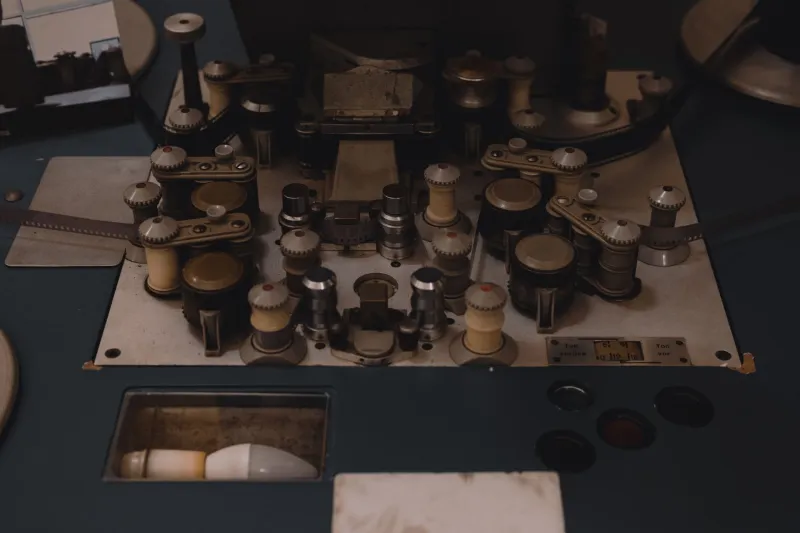
The Film That Never Leaves the Drive: Understanding the Real Difference Between Refining and Hiding
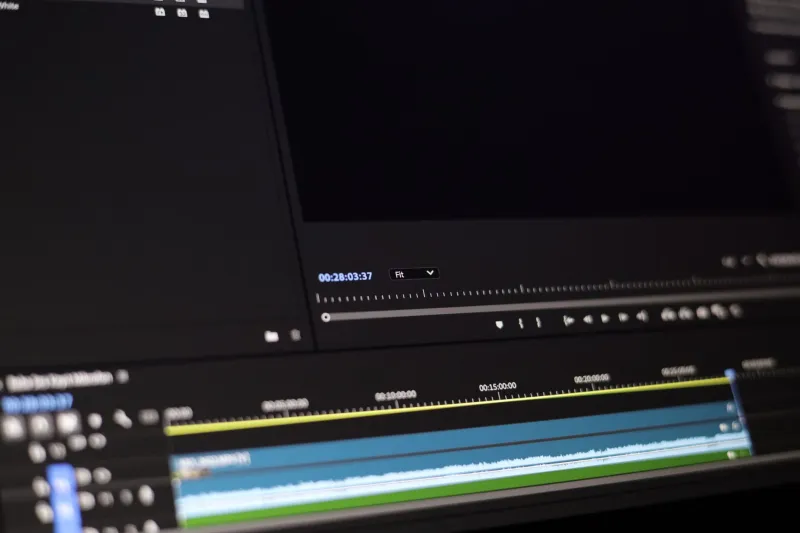
At some point in the development of nearly every serious filmmaker, there is a project that exists in a curious state of suspension. The picture is locked—or nearly locked. The sound mix is done—or nearly done. The film is, by any reasonable external standard, finished. And yet it remains on the drive, accumulating months and then years of not-quite-readiness, visited occasionally for another pass, another small adjustment, another reason to delay the moment of release.
The filmmaker who holds that project will often describe the delay in the language of craft. There is a specific scene that isn't working. The color grade needs another look. The pacing in the second act could be tighter. These concerns may be entirely legitimate. They may also be the vocabulary that fear has learned to speak in order to sound like professionalism.
Learning to tell the difference is not a matter of technique. It is a matter of honesty.
Why Perfectionism Is Such an Effective Disguise
The reason creative avoidance is so difficult to identify—in oneself, particularly—is that it borrows its vocabulary from genuine artistic care. The instinct to refine, to keep working until something is as strong as it can be, is a real and valuable instinct. Every filmmaker who has ever rushed a project to completion and regretted it understands why the impulse toward patience deserves respect.
But that same vocabulary, applied to a project that is already complete in any meaningful sense, becomes something else. It becomes a mechanism for postponing the moment of exposure—the moment when the work leaves the controlled environment of the edit bay and enters the unpredictable space where other people respond to it, or don't.
The threat of that moment is not trivial. A film that has not been released cannot be dismissed. It cannot be misunderstood. It cannot fail to find an audience, because it has not yet tried. In the state of perpetual refinement, it remains perfect in the way that only unreleased things can be: it holds all possible futures without committing to any of them.
This is a seductive condition, and it is worth naming it clearly as such.
What Legitimate Revision Actually Looks Like
Legitimate revision has a specific character that distinguishes it from avoidance. It is targeted. It addresses a defined problem. It has a discernible end point. When a filmmaker returns to a project with a genuine revision in mind, they can typically articulate what the problem is, why it matters to the film's central purpose, and what a successful solution would look like.
The revision, when completed, produces a sense of resolution. The filmmaker watches the corrected section and recognizes that the problem has been addressed. The work is now closer to what it was trying to be. That recognition is the signal that the revision was real.
Avoidance masquerading as revision does not produce that resolution. It produces a temporary quieting of anxiety followed by the emergence of a new concern, which requires its own attention, which leads to another pass, which surfaces another issue. The process does not converge. It simply continues, because its function is not to improve the film—it is to defer the moment of release indefinitely.
The Practical Framework: Three Questions
When a filmmaker is genuinely uncertain whether they are refining or hiding, three questions tend to clarify the situation.
The first: can you describe the specific problem you are trying to solve? Not in general terms—not "the film isn't quite there yet"—but precisely. What is wrong, where does it occur, and how does it undermine what the film is trying to accomplish? If the answer is vague or shifts each time you ask it, that vagueness is informative.
The second: if you solved that problem today, would you release the film? If the answer is anything other than yes, then the problem you have named is not the actual obstacle. Something else is holding the project, and identifying that something else is the real work.
The third: what is the worst realistic outcome of releasing this film? Not the catastrophic imagined outcome—the realistic one. Map it concretely. A film that receives no attention. A film that receives mixed reviews. A film that finds a small audience and then disappears. Are any of those outcomes actually worse than the outcome of never releasing it at all? For most filmmakers, examined honestly, the answer is no.
What Release Actually Does
There is a category of knowledge that can only be acquired by releasing work into the world. A filmmaker who has never allowed a project to be seen cannot know how their work communicates, what it means to audiences who did not make it, where its actual strengths lie, or where its genuine weaknesses are. All of that information is inaccessible until the work is released, regardless of how many more passes are made on the edit.
This is not an argument for releasing work prematurely or carelessly. It is an argument for recognizing that the refinement process has a point of diminishing returns, and that beyond that point, continued revision does not improve the film—it simply delays the acquisition of information that only release can provide.
The filmmaker who releases a film that is ninety percent of what it could theoretically be learns more about their craft from that release than the filmmaker who spends another year achieving ninety-two percent and then releases nothing.
The Discipline of the Deadline
Many filmmakers who struggle with indefinite refinement find that external structure resolves the problem more effectively than internal deliberation. A festival submission deadline, a screening commitment, a distribution conversation with an actual date attached—these external constraints convert the abstract question of readiness into a concrete one, and that concreteness tends to clarify things quickly.
The film is either ready for this deadline or it is not. If it is not, what specifically needs to happen before it will be? If nothing specific can be named, then the film is ready, and the deadline is the mechanism that makes that readiness visible.
This is not a compromise with quality. It is a recognition that readiness, in the absence of a defined standard, is not a stable concept. It expands to fill whatever time is available. The discipline of the deadline does not lower the standard—it makes the standard legible.
Releasing as a Creative Act
Releasing a film is not the end of creative engagement with it. It is the beginning of the film's life as something other than a private object. That transition is irreversible, and the irreversibility is part of what makes it frightening. But it is also what makes it meaningful.
A film that remains on the drive is not a film in any complete sense. It is a potential film, a film in waiting. The act of release is what transforms it from a private creative exercise into the thing it was always trying to become: a piece of work that exists in relationship with an audience, carrying whatever meaning that relationship generates.
The filmmaker who understands this tends to approach release not as a loss of control but as the completion of an intention. The work was made to be seen. Releasing it is not an act of surrender—it is an act of faith in what was made.