The Fewer Who Find You: Why Cultivating a Devoted Audience Outlasts Any Algorithm
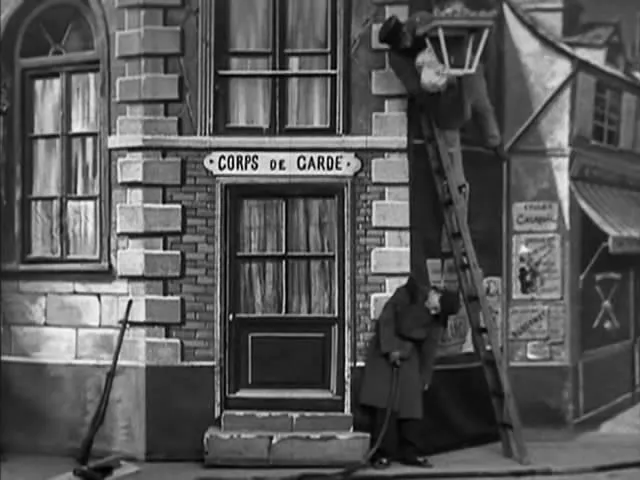
Photo: Georges Méliès, Public domain, via Wikimedia Commons
There is a particular kind of anxiety that has settled over independent filmmakers in the last decade — a low, persistent hum that intensifies every time a platform updates its discovery algorithm or a competitor's short film accumulates a million views overnight. The anxiety has a name, even if most filmmakers won't say it aloud: the fear of being unseen.
What that fear produces, however, is often far more damaging than obscurity itself. It produces work made for the algorithm rather than for the audience. It produces promotional strategies calibrated to trend cycles rather than to genuine creative identity. And it produces filmmakers who mistake a large, indifferent viewership for a meaningful one.
The question worth asking — the one that tends to get buried beneath the noise of engagement metrics and follower counts — is a deceptively simple one: Who, precisely, are you trying to reach, and what do you want them to do after they find you?
The Difference Between Visibility and Resonance
Visibility and resonance are not the same thing, though the platforms on which most filmmakers now depend treat them as interchangeable. A film can be seen by millions of people and remembered by almost none of them. Conversely, a film seen by a few thousand people who return to it repeatedly, who share it with specific friends, who write about it in essays or cite it in their own creative work, generates a kind of cultural weight that raw view counts cannot manufacture.
This distinction matters practically, not just philosophically. Filmmakers who build resonant audiences — even small ones — tend to find that those audiences follow them across projects. They become invested not merely in a single film but in a body of work, in a sensibility, in a creative voice. That investment is the foundation of a sustainable career. It is also, notably, the thing that no algorithm can replicate or replace.
The filmmaker Kelly Reichardt offers an instructive example. Her films — Wendy and Lucy, Meek's Cutoff, First Cow — have never approached mainstream commercial performance. They are slow, precise, formally rigorous works that ask a great deal from their viewers. Yet Reichardt has sustained a filmmaking practice across more than three decades precisely because the audience she has cultivated is deeply committed. Those viewers do not merely watch her films; they advocate for them, teach them, program them. The relationship is qualitatively different from what viral reach produces, and it has proven far more durable.
Strategic Obscurity as a Creative Posture
The phrase "strategic obscurity" tends to make filmmakers uncomfortable, because it sounds like a rationalization for failure. It is worth being clear: choosing a smaller, more engaged audience is not the same as accepting that no one will watch your work. It is a deliberate orientation toward the right viewers rather than the most viewers.
What does that orientation look like in practice? It begins with a filmmaker being genuinely specific about who their work is for. Not in a demographic sense — not "adults 25 to 34 with an interest in independent cinema" — but in a more intimate sense. Whose aesthetic sensibility does your work speak to? Who are the people who will not merely enjoy your film but feel, upon watching it, that it was made for them specifically?
When a filmmaker knows the answer to that question, their promotional decisions change. The goal shifts from maximizing impressions to finding the particular communities, publications, venues, and curators who already have the attention of those specific people. A well-placed review in a publication read closely by the right five thousand people is worth more, in career terms, than a fleeting viral moment that delivers a million distracted viewers.
The director Andrew Bujalski, often cited as a founding figure of the American mumblecore movement, has spoken in interviews about the value of building an audience through film festivals, academic screenings, and word-of-mouth networks rather than through conventional marketing. His films have never been widely seen in a commercial sense, but the people who have seen them have consistently been the kinds of viewers — critics, programmers, other filmmakers — whose engagement has extended his reach in ways that no advertising budget could have purchased.
The Long Game and the Platform Trap
Platforms are not neutral infrastructure. They are businesses with their own incentive structures, and those structures currently reward content that generates immediate, high-volume engagement. Filmmakers who orient their work toward platform optimization are not simply making a marketing choice; they are making a creative choice, one that tends to push work toward accessibility, brevity, emotional legibility, and the kind of visual grammar that reads clearly on a phone screen in a busy environment.
None of those qualities are inherently bad. But they are not the only qualities that matter in cinema, and they are not the qualities that tend to produce work with lasting power. The films that endure — the ones that get programmed in retrospectives, taught in universities, cited by younger filmmakers — are rarely the ones that were optimized for the moment of their release. They are the ones that were made with a particular vision and found the audiences capable of receiving that vision.
This is the core argument for strategic obscurity: the audience you build through deliberate, specific cultivation tends to be the audience that sustains you. The audience you chase through algorithmic optimization tends to be the audience that disappears the moment your content stops appearing in their feed.
Building the Relationship Before the Film Exists
One practical implication of this framework is that audience cultivation should begin long before a film is complete — and should be understood as a relationship rather than a transaction. Filmmakers who document their process thoughtfully, who engage with the communities their work is in conversation with, who make their creative thinking visible over time, tend to arrive at release with an audience that is already invested rather than an audience that needs to be convinced.
This is not the same as building a social media following. It is more specific and more intentional than that. It means identifying the writers, programmers, educators, and fellow artists who share your aesthetic commitments, and building genuine relationships with those people over time. It means placing your work in contexts — festivals, screenings, publications — where it will be encountered by the right eyes, even if those contexts are smaller than you might wish.
The filmmaker who does this work consistently, over years, discovers something that the algorithm cannot teach: that a small audience of the right people is not a consolation prize. It is the actual goal. It is the foundation on which everything else — the next project, the next collaboration, the next decade of work — is built.
The question is not how many people you can reach. The question is who you are reaching, and whether they will still be there when you have something new to say.